Thursday, 4 December 2014

One of the great things about being a food blogger is that it compels you to be somewhat adventurous

That said, as much as I like it, my mom likes it, and my friends like it, you may not. But I do encourage you to try it, especially if you have some romaine hearts around. When you’re done with the grilling, you can either serve them whole (one romaine heart per person), or slice them crosswise, and toss them in a bowl for a grilled salad.
Grilled Romaine Lettuce Recipe
Prep time: 10 minutes Cook time: 10 minutes Yield: Serves 3-4.
What are romaine hearts? Just the inner leaves of romaine lettuce that stay somewhat tightly together, not the outer leaves.
Ingredients 3 to 4 romaine hearts 3 Tbsp olive oil 1 Tbsp red wine vinegar (or cider vinegar) 2 teaspoons chopped fresh herbs such as rosemary, thyme, oregano (or 1 teaspoon dried mixed herbs) 1/4 teaspoon salt Pinch freshly ground black pepper
Method


1 Prep the romaine hearts—pull off any old leaves. Chop off the top 1 or 2 inches of the lettuce head, and shave off the browned part of the root end, leaving the root end intact so that the lettuce head stays together.
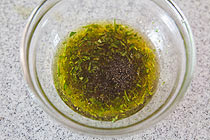

2 Prepare your grill for high, direct heat. Paint the lettuce hearts all over with the vinaigrette. Prepare the vinaigrette. Put the oil, vinegar, herbs, salt and pepper in a small bowl and whisk with a fork to combine.


3 Grill the romaine hearts until lightly browned on all sides, turning every minute or two until done.
Serve immediately. You can either serve the hearts whole, or chop them and toss them for a salad.
Hello! All photos and content are copyright protected. Please do not use our photos without prior written permission. If you wish to republish this recipe, please rewrite the recipe in your own unique words and link back to the source recipe here on Simply Recipes. Thank you!
TheocookRead more »

Monday, 15 September 2014

10 Things You Do Every Day That Are Damaging To Your Body
10 Things You Do Every Day That Are Damaging To Your Body - DoctorsHangout.com #xg_navigation ul div.xg_subtab ul li a { color:#333333; background:#F2F2F2;}#xg_navigation ul div.xg_subtab ul li a:hover { color:#000000; background:#D9D9D9;}@import url(http://static.ning.com/socialnetworkmain/widgets/index/css/common.min.css?xn_version=2728956736);@import url(http://static.ning.com/socialnetworkmain/widgets/profiles/css/component.min.css?xn_version=2627375134);@import url(http://api.ning.com:80/files/FXc3J*dW*e0KO4x5VZRHklK3OIerG0iXnrXNQNsqiRukT5uFxktGEGS4Qv037-*5kJaTafFC*fjmHN99NDKNWbD4UkNQs6t7/1076308476.css?xn_version=201408140622);@import url(http://api.ning.com:80/files/FXc3J*dW*e3lVB9hM2MKhpBWR4NIoIll33tQ2x*YjOEIToCNlcn3msz-FBmXMeyRyku*h7OFM0ufO4MgfcY39q7rQNdfTmxZ/1076330305.css?xn_version=201408140622); window.fbAsyncInit = function () { FB.init({ appId : '110416462325944', status : true, cookie : true, xfbml : true, oauth : true, channelUrl : 'http://www.doctorshangout.com/xn_resources/widgets/index/js/facebookapp/channel.html' }); var n = xg.addOnFacebookLoad.functions.length; for (var i = 0; i Search Sign Up Sign In try { GlamCreateSlot("183770529", "728x90", "Ning_Top_Leaderboard"); GlamSetSlotData("Ning_Top_Leaderboard", "ningid=2002836"); GlamCreateSlot("183770529", "300x250", "Ning_Top_Right"); GlamSetSlotData("Ning_Top_Right", "ningid=2002836"); GlamTrack("183770529"); } catch (e) {} DoctorsHangout.com A Professional Networking Site for Doctors & Medical Students Worldwide MainMy PageMembersForumGroupsImagesLibraryVideosEventsBlogsJobsChatAboutLeaderboards All Medical Blog PostsMy Medical BlogAdd 10 Things You Do Every Day That Are Damaging To Your Body Posted by Dr. Mercedes R. Entienza on September 4, 2014 at 8:51am View Blog
Most people don't try to do anything that's bad for their health. But sometimes, you go about your day, not really thinking about anything and then BAM! You feel a little sick, you fall down, you get a headache, or any other ailment that may plague you. More often than not, you have no idea why your day is suddenly awful. Well, these could be one of the reasons why you are actually living a rather unhealthy life without even knowing it.
1.) Look at this guy, using his computer. It's awesome, right? Wrong! Using a computer can be damaging to your health. The screen brightness can cause eye strain and headaches. Some computers also contain toxins that cause neurological damage as well. gght2.) Nothing can be wrong with blow drying my hair though, am I wrong? Yes you are! Heat causes the hydrogen bonds in your hair to deteriorate which makes your hair susceptible to falling out.
 videojug3.) Biting a pencil is safe though, please tell me it's safe. It's not. Biting pencils and pens can damage your teeth or shift the positioning of them.
 dynamicdentalinc4.) I can go out without putting on sunscreen and I'll be fine. Wow. You are just silly. Not only does sunblock protect you from harmful UV rays that cause skin damage, it helps your skin looking young and we all want that, right?
 skincancer5.) Showering every day isn't wrong. Actually it is, you nonbeliever. Showering every day with hot water and a scrubbing apparatus wears away your skin's lipids which help keep your skin's moisture.
 islandbathrooms6.) I heard jogging is healthy, please don't make me feel stupid about that one. Sorry, I have to. Jogging increases your risk of arthritis, especially in your knees where most of the damage is felt.
 flonthego7.) I can eat lemons, there is nothing wrong with that. You couldn't be more wrong. The acidity in lemons actually erodes your teeth's enamel, which is essential to a healthy mouth.
 sheknows8.) I can enjoy popcorn when I see a movie though, right? I wouldn't if I were you! Popcorn can get stuck in your teeth and cause infections. Also, biting down on a kernel can crack your teeth if you susceptible to that kind of damage.
 femside9.) There's nothing wrong with sitting in your office though, right? Nay! Your risk of heart disease increases 64% if you sit at your desk for 6+ hours a day.theglobeandmail10.) Wearing socks in bed couldn't possibly be wrong. I think it is YOU who couldn't be more wrong. Wearing socks in bed prevents the gaseous exchange of your body's cells which not only damages your skin cells, but your brain cells as well.
 beautynews
These 10 perfectly normal activities are completely ruining your life... and you had no idea. Adjust your lifestyle so you can live the healthiest life possible (even if that means not wearing socks in bed). Share this post with your friends to alert them of their unhealthy ways.
xg.addOnRequire(function () { xg.post('/main/viewcount/update?xn_out=json', {key: '2002836:BlogPost:1040824', x: 'b54fbbe'}); }); Views: 3 Tags:
Share Facebook < Previous Post Next Post > Comment You need to be a member of DoctorsHangout.com to add comments!
Join DoctorsHangout.com
RSSWelcome to
DoctorsHangout.com
or Sign In Or sign in with: Photos
 Sweat | FTP Lectures by Dr.Adeleke Adesina-ftplectures
 Red Blood Cells |FTP Lectures by Dr.Adeleke Adesina-ftplectures
 Brain Neurons | FTP Lectures by Dr.Adeleke Adesina-ftplectures
 Taste Bud | FTP Lectures by Dr.Adeleke Adesina-ftplectures
 Hair | FTP Lectures by Dr.Adeleke Adesina-ftplectures Add Medical Images View All
 xg.addOnRequire(function () { x$('.module_photo').mouseover(function () { x$(this).find('.photo-facebook-share').show(); }) .mouseout(function () { x$(this).find('.photo-facebook-share').hide(); }); }); Medical Videos
 11 Terrifying Facts About Makeup Added by Sophia Tanya Arellano
 12 Food Facts You Won't Believe Are True Added by Sophia Tanya Arellano
 17 Facts About E-Cigarettes That Might Surprise You Added by Sophia Tanya Arellano
 The Miracle of Life: How it all began Added by Sophia Tanya Arellano
 Localization In Neurology Added by Vishal Gurunath Pawar
 Internuclear ophthalmoplegia Added by Vishal Gurunath Pawar
 How to present a neurological diagnosis Added by Vishal Gurunath Pawar
 Basics Of Speech And Language Added by Vishal Gurunath Pawar Add Medical Videos View All xg.addOnRequire(function () { x$('.module_video').mouseover(function () { x$(this).find('.video-facebook-share').show(); }) .mouseout(function () { x$(this).find('.video-facebook-share').hide(); }); }); NEJM Jobs © 2014 Doctors Hangout | About DH Contact US | Report an Issue | Terms of Service var sources = ["http:\/\/static.ning.com\/socialnetworkmain\/widgets\/lib\/js\/jquery\/jquery-ui.min.js?xn_version=2186421962","http:\/\/static.ning.com\/socialnetworkmain\/widgets\/lib\/js\/modernizr\/modernizr.custom.js?xn_version=201408140622","http:\/\/static.ning.com\/socialnetworkmain\/widgets\/lib\/js\/jquery\/jstorage.min.js?xn_version=1968060033","http:\/\/static.ning.com\/socialnetworkmain\/widgets\/lib\/js\/jquery\/jquery.autoResize.js?xn_version=201408140622","http:\/\/static.ning.com\/socialnetworkmain\/widgets\/lib\/js\/jquery\/jquery.jsonp.min.js?xn_version=1071124156","http:\/\/static.ning.com\/socialnetworkmain\/widgets\/lib\/js\/Base64.js?xn_version=201408140622","http:\/\/api.ning.com:80\/files\/FXc3J*dW*e24AHnOzrGd-i6MpzMg4SIG6LNBnyvSqCmnvF1rf26KX5n8uwsqyD8dCYGZg4bNEIG8ZZOA4erE78cLEHs*A-d7\/set_common_min.js?r=1407998541","http:\/\/api.ning.com:80\/files\/DBD4PE5EidVfv0LyXaOMOCQ9zCr4ffKWkaPMl8PU-bdLayn99bW2RWpmpHERhiXIKN4*WwxtiMkdCWEqpMpztNIkt2OWgCKd\/set_shared_c0_min.js?r=1406593122","http:\/\/api.ning.com:80\/files\/8ikGPdIHucIqcKQWebo8kJ2tnkVLHyEKG5hay9cwvnt7y75BQNadhXtYH8JZqudbTvEe5rXD21kBnXYMgrweDEuDlNp-pBS7\/1071420355.js?r=1404970736"]; var numSources = sources.length; var heads = document.getElementsByTagName('head'); var node = heads.length > 0 ? heads[0] : document.body; var onloadFunctionsObj = {}; var createScriptTagFunc = function(source) { var script = document.createElement('script'); script.type = 'text/javascript'; var currentOnLoad = function() {xg._loader.onLoad(source);}; if (script.readyState) { //for IE (including IE9) script.onreadystatechange = function() { if (script.readyState == 'complete' || script.readyState == 'loaded') { script.onreadystatechange = null; currentOnLoad(); } } } else { script.onerror = script.onload = currentOnLoad; } script.src = source; node.appendChild(script); }; for (var i = 0; i Sign in to chat! xg.tg = function () { var cookies = document.cookie.split(';'); var re = /^\s*xn_visitor=([^\s]*)/; var vc = ''; for (i in cookies) { if (!cookies.hasOwnProperty(i)) { continue } var match = re.exec(cookies[i]); if (match) { vc = match[1]; break; } } var image = new Image(); var user = vc + ',,doctorshangout'; image.src = 'http://www22.glam.com/cTagsImgCmd.act?gname=ning_user&gvalue=' + user + '>id=5000059145&gcmd=setc&gexpires=604800&ord=' + Math.random()*1E16; }; xg.tg(); var _comscore = _comscore || []; _comscore.push({ c1: "2", c2: "6770185" }); (function() { var s = document.createElement("script"), el = document.getElementsByTagName("script")[0]; s.async = true; s.src = (document.location.protocol == "https:" ? "https://sb" : "http://b") + ".scorecardresearch.com/beacon.js"; el.parentNode.insertBefore(s, el); })();
Read more »
Friday, 29 August 2014

Male Circumcision: 5 Things You May Or May Not Know About Circumcision

Five things you may not know about circumcision.
In regard to male circumcision, health care professionals tend to remain on the fence when it comes to parental recommendations. The fact and fiction surrounding the practice of removing some or all of the foreskin from a penis has been met with uncertainty due to conflicting research and religious traditions. From its impact on sexual function to possible mental health implications, expecting parents may find it hard to make a final decision on circumcising their infant.
“Circumcision is a safe procedure, but it is a surgical procedure and care must be taken,” Dr. Carey Chronis, author of Dr. Carey’s Baby Care: First Year Baby Care Guide, toldMedical Daily in an email, adding: “The two major risks are typical of any procedure where skin is cut, namely, bleeding and infection. With proper care and periodic inspection, this should not be an issue. Two major benefits of circumcision are the ease in cleanliness and a slightly lower chance of urinary tract infections. Although benefits exist, they are minimal and are usually not the deciding factor for having a child circumcised.”
Let’s clear up some of the myths and realities facing male circumcision by discussing five things you may or may not know about the procedure:
Although research in the past has shown that circumcision can reduce the risk of contracting the human immunodeficiency virus (HIV) in men by 50 to 60 percent, the exact cause has not been well understood. A recent study conducted at the Translational Genomics Research Institute revealed that removing the foreskin from a penis can change the bacterial community known as the “microbiome,” leading to improved protection against the HIV infection. TGRI researchers based the study on 156 men in Uganda who were circumcised as adults and reported back a year after the procedure when bacteria amounts had dropped by 33.3 percent. A specific type of bacteria reduced by circumcision was found to activate Langerhans cell in the foreskin. Although Langerhans cells are known as the body’s first line of defense, when activated, they can actually enable HIV transmission by binding the virus to CD4 and T cells — cells that are specifically targeted by HIV.
Researchers from the University of Quebec’s INRS-Institut Armand-Frappier in Montreal have found that on top of STI protection, circumcision may also protect a man against the risk of developing prostate cancer. The study, following up on research surrounding lower rates of prostate cancer among Muslim and Jewish men in the West, was based on interviews from 3,208 men (1,590 of which had been diagnosed with prostate cancer). Compared to uncircumcised men, those who were circumcised as infants were 14 percent less likely to develop prostate cancer. Surprisingly, men who were circumcised later in life were 45 percent less likely to be iagnosed with prostate cancer compared to uncircumcised men.
3. Risk Grows With Age And Personal Choice
Possible risk factors associated with circumcision such as bleeding, infection, excessive skin removal, difficulty urinating, and scarring seem to become more common with age. This is why many physicians urge parents to have the procedure done early if they are planning to have it done at all. A study out of the Institute for Health Metrics and Evaluation at the University of Washington took into account literature reviews and medical billing codes of over 1.4 million males. Findings revealed that boys between the ages of 1 and 10 were 10 to 20 times more likely to suffer adverse health concerns as a result of circumcision compared to boys under the age of 1. Common risks of a late circumcision among boys in the study included damage to the urethra and too much foreskin left behind.
While circumcision is generally regarded as a quick and easy procedure, that does not mean the infant will be free from any pain. In circumcisions that are done without pain relieving medication such as analgesia or lidocaine, babies can experience changes in heart rate, blood pressure, oxygen levels, behavior, and cortisol levels. This is why many doctors recommend analgesia, a mixture of local anesthetics, or a numbing injection like lidocaine to reduce the amount of pain the infant experiences before and after the procedure.
“Personal preference is often the main deciding factor,” Carey added. “The procedure is very quick, usually taking about five minutes. Although many options are available for pain control, typically, lidocaine is injected at the base of the penis to numb the area before performing the procedure. After the circumcision, most babies appear not to exhibit significant levels of discomfort. In the rare instance that your baby is more fussy than usual following the procedure, some acetaminophen can be given as directed by your physician. Once circumcised, healing usually takes one week.”
A preliminary investigation surrounding the trauma experienced by infants who undergo a circumcision has revealed a possible link to alexithymia, difficulty identifying and expressing feelings. Researchers issued the Toronto Twenty-Item Alexithymia Scale checklist to 300 men who also filled out personal history questionnaires. Compared to uncircumcised men, men who were circumcised scored 19.9 percent higher on the alexithymia scale and had a higher prevalence of two of the three alexithymia factors, most notably difficulty identifying feelings and difficulty describing feelings.
“The act of a boy being separated from his primary attachment figures, his four limbs restrained, his penis forcibly handled and then enduring excruciating pain can certainly cause psychological and sexual trauma to a boy,” Laurie A. Couture, licensed mental health counselor and author of Instead of Medicating and Punishing, told Medical Daily in an email, adding:
Unfortunately, this trauma will almost always be unconscious, as most medical circumcisions occur when a child is pre-verbal, putting him at risk for alexithymia. Circumcision disrupts secure mother-son attachment, as the child’s mother is not available to respond to her child’s cries of distress. Many boys are so distressed by the procedure that they dissociate and fall asleep. Circumcision also violates a non-consenting child’s body with an invasive procedure that is often done for little more than tradition and parental cosmetic preferences. The practice has the implication of shaming boys and their natural penises which could lead to low self esteem, body image issues, self hatred or even self harm.
Read more »
Wednesday, 27 August 2014
12 Unexpected Things that Mess With Your Memory
You regularly ransack the house to find your keys. You suddenly can’t recall the name of your kid’s teacher. You made your six-month dentist appointment three months late. Sound familiar? Fear not: most forgetfulness isn’t anything serious, says Majid Fotuhi, MD, PhD, founder and chief medical officer of NeurExpand Brain Center in Luterville, MD and co-author of The Memory Cure. Lack of sleep, certain medications, and even stress can impact your memory. “Fortunately, your brain is malleable, meaning it changes and improves,” says Dr. Fotuhi. “Memory can be boosted with simple powerful interventions.” Here are surprising things that impact your memory in both good and not-so-good ways.

1. A dysfunctional thyroid
When your thyroid’s out of whack, you may feel too hot, too cold, anxious, depressed—and your memory may also be lagging. “Although the thyroid doesn’t have a specific role in the brain, memory loss is the one thing a person notices when it stops functioning normally,” says Dr. Fotuhi. A butterfly-shaped gland that sits along the front of your windpipe, the thyroid reigns over almost all your body’s metabolic processes. “People with high or low thyroid levels—which are very common in women—may have difficulty with memory and concentration,” he says. Ask your doctor for a simple thyroid test to determine if it’s the culprit behind your memory problems.

2. Hot flashes
Every time hot flashes make you you feel like sticking your head in the freezer, you may also feel a fog rolling into your brain. “The more hot flashes a woman experiences during menopause, the worse her ability to remember names and stories,” says Dr. Fotuhi. “Fortunately, hot flashes don’t damage the brain in any way. Memory improves once the hot flashes subside.” Other menopause-related symptoms contribute to memory loss, including insomnia and sleep apnea, Dr. Fotuhi says.

3. Lack of sleep
Last night’s late party makes it less likely you’ll remember your new coworker’s name the next day. “While some part of the brain takes a siesta when we sleep, deeper areas involved with memory and emotional response become relatively more active,” says Allen Towfigh, MD, medical director of New York Neurology & Sleep Medicine. “Individuals with sleep deprivation and sleep disorders not only suffer from impaired memory but also daytime fatigue, impaired attention, and reduced reaction time.” The standard recommendation of eight hours of sleep a night doesn’t necessarily work for everyone. If you wake up fatigued and fall asleep unintentionally during the day, then you may need more sleep, says Dr. Towfigh.

4. Anxiety and depression
Worrying about an upcoming presentation in front of the CEO may also hinder your memory, several studies show. “We don’t understand the exact link, but strong evidence indicates depression, anxiety, and bipolar disease disrupts the neural circuitry involved in developing and retrieving memories,” says Dr. Towfigh. “The severity of the memory loss often mirrors the severity of the mood disorder—severe depression brings about equally severe memory loss.” Prolonged periods of everyday stress increase cortisol levels in the brain, which causes our brain cells to lose synapses (the bridges that connect our brain cells to one another), and make it more difficult to create and retrieve memories. The good news is when memory loss exists with a mood disorder (including anxiety and depression), the memory loss is usually at least partially reversible. “As the individual’s mood improves, often so does the memory loss,” says Dr. Towfigh.

5. Prescription drugs
Check your medicine cabinet: many common prescription drugs can make you feel forgetful. Anxiety disorder meds like Xanax, Valium, and Ativan (which are benzodiazepines) put a damper on the part of the brain that moves events from the short-term to the long-term memory. Tricyclic antidepressants have a similar effect. Heart medicines including statins and beta blockers have also been linked to memory issues, as have narcotic painkillers, incontinence drugs, sleep aids, and even antihistamines like Benadryl. Bottom line: Don’t stop taking your (potentially life-saving) medications, but talk to your doc if you believe any drug you’re on may be messing with your memory.

6. Smoking
If you’re still smoking, that may help explain memory lapses. “Smoking damages the brain by impairing its blood supply,” says Dr. Towfigh. Research published in the Archives of General Psychiatry gathered from data obtained from more than 7,000 men and women found a more rapid decline in brain function (which included memory along with vocabulary and other brain functions) with age than from those who never smoked. “Furthermore, cigarette smoking promotes the accumulation of abnormal proteins which impair the brain’s ability to process and relay information,” says Dr. Towfigh.

Greasy burgers and French fries pack on pounds and are hard on your heart—and they may also cause memory issues. One study revealed that adolescent mice had poorer learning and memory skills after being fed a high-fat diet for eight weeks, while another study on middle-aged rats found that the hippocampus (the part of the brain responsible for short-term memory) may be particularly vulnerable to the impact of high-fat diets.
More research is needed to determine for sure whether or not high-fat diets impact human memory, but here’s what we do know: Calorically dense diets promote type 2 diabetes, hypertension, and cardiovascular disease, which can all do damage to our brains, says Dr. Towfigh. “This holds true earlier in life, too. Studies link childhood obesity with a reduced attention span and impaired concentration and focus.”

A sudden emergency can make it tough to recall something as simple as your home address. A rat study published in Neuron shows that stress hormones influence an area of the brain area that controls working memory. Researchers found that repeated stress reduced receptors in the part of the brain that’s connected to thought processes Although this study involved animals, the human brain works similarly, explains Dr. Towfigh. “Repeated or chronic stress can be harmful. Regular exposure to elevated glucocorticoids (a hormone released by the adrenal gland) also causes our brain cells to reduce receptors, making brain cells less capable of responding to neurochemical (brain chemicals) cues.” Finding ways to relieve stress may help: Practicing meditation does double duty by easing stress and helping improve memory, according to a study from the University of California, Santa Barbara. College students who completed eight 45-minute meditation sessions over two weeks increased their average GRE exam scores from 460 to 520 and showed improvement on tests of working memory.

A nasty cold sore does more than make you feel self-conscious—it may be messing with your memory, according to a 2013 study in Neurology. Researchers found that people who exposed to many germs, such as herpes simplex type 1 (the cold sore virus), over their lifetimes were more likely to have memory problems than those exposed to fewer germs. Among more than 1,600 study participants, those with a higher “infectious burden” had a 25% increase in the risk of a low score on a cognitive test. Although there is no vaccine for the cold sore virus, childhood vaccinations against other viruses could help prevent problems later in life, the researchers suggest. In addition, regular exercise may help too—doctors think repeated infections may damage blood vessels, since a high infectious burden is also linked to a greater risk of stroke and heart attack.

Now for some good news: chemicals found in green tea may help improve your memory, according to a University of Basel study. “Several compounds, EGCG and L-theanine, in green tea increase neurogenesis (growth of new brain cells) in the hippocampus, the part of the brain used for short-term memory and learning new things,” says Dr. Fotuhi. How much green tea has not yet been determined, says Dr. Fotuhi, who recommends combining green tea with other healthy habits such as exercise for greatest memory improvement benefits.

Regular sweat sessions also help keep memories sharp. “Physical exercise improves mood and sleep and by doing so, it invariably improves cognition and memory,” says Dr. Towfigh. An animal study published in Brain, Behavior and Immunity, for example, showed daily exercise increased brain cell growth after 12 weeks of conditioned running. Dr. Fotuhi recommends 45 minutes of aerobic exercise four days a week for the best memory boost.

Vegetarians and vegans are at a higher risk of being deficient in vitamin B12, which keeps the body’s nerve and blood cells healthy and helps make DNA. That’s because B12 occurs naturally only in animal foods: shellfish, meat, poultry, eggs, and dairy. In addition to fatigue, loss of appetite, constipation, and weight loss, a B12 deficiency can also lead to memory problems. If you feel your meatless diet may be affecting your memory, your doctor can give you a blood test that determines whether you should be taking a vitamin B12 supplement.
Note: it’s not just veggies who are at risk for a B12 deficiency. Pregnant women, older adults, and anyone with pernicious anemia (a potentially life-threatening lack of vitamin B12 due to an inability to absorb it from food) or gastrointestinal disorders like celiac disease and Crohn’s disease may need supplementation.
Read more »